Garima

A few years ago, being "tech-savvy" meant knowing how to use spreadsheets, presentation software, or project management tools. Today, that definition has completely changed.
Artificial intelligence is no longer just another workplace tool it's becoming an everyday partner. Whether it's drafting emails, analyzing data, creating content, automating repetitive tasks, or supporting hiring decisions, AI is transforming how professionals work across every industry.
But here's what's interesting: the biggest change isn't that AI is replacing jobs. It's that professionals who know how to work with AI are becoming faster, more productive, and more valuable than those who don't.
This shift has given rise to a new kind of professional the AI native professional.
An AI native professional isn't necessarily an AI developer or data scientist. Instead, they're someone who knows how to use AI to make smarter decisions, automate routine work, boost creativity, and focus on solving higher-value business problems. In today's workplace, AI isn't replacing human expertise it's amplifying it.
According to Microsoft's 2024 Work Trend Index, 75% of knowledge workers already use AI at work, making AI adoption one of the fastest workplace transformations we've seen in decades.
In this blog, you'll discover what it means to be an AI-native professional, the essential AI skills needed to thrive in 2026, and practical ways to future-proof your career. You'll also learn how businesses can build AI-ready teams and how Redrob AI supports this transformation.
What Is an AI Native Professional?
Imagine two marketing managers starting their day with the exact same workload.
The first spends hours digging through documents, writing reports from scratch, responding to emails, organizing spreadsheets, and manually collecting information from different tools.
The second completes those repetitive tasks in minutes using AI. Meeting notes are summarized automatically, reports are drafted instantly, research is completed in seconds, and routine workflows run on their own. Instead of spending the day managing tasks, they spend it solving problems, collaborating with their team, and making strategic decisions.
The difference isn't talent.
It isn't experience.
It's how they work.
That's the mindset of an AI native professional.
Rather than seeing AI as another app to learn, they treat it as a trusted workplace partner that helps them work smarter every day.
They understand:
Which tasks AI can automate efficiently
Where human creativity and judgment make the biggest impact
How to validate AI-generated insights before acting on them
How to combine automation with strategic thinking
As AI becomes part of everyday business, developing this mindset is quickly becoming one of the most valuable AI skills in demand for professionals across every industry.
Why AI and the Future of Work Are Evolving Together
Work isn't changing because new technology exists.
It's changing because expectations have changed.
Businesses today expect employees to spend less time on repetitive administration and more time creating ideas, solving customer problems, making informed decisions, and driving business growth.
That's exactly where AI creates value.
Instead of replacing professionals, AI removes the repetitive work that often slows them down. It helps teams access information faster, automate routine workflows, and focus on the work that requires creativity, empathy, and strategic thinking.
This is why discussions around AI and the future of work are no longer about replacing people they're about empowering people.
Professionals who embrace AI are already seeing benefits such as:
Faster decision-making
Increased productivity
More accurate insights
Better collaboration across teams
More time for innovation and creative work
The Future of work AI isn't about humans competing with machines.
It's about humans achieving more because they know how to work alongside them.
The AI Skills 2026 Professionals Need to Stay Ahead
Being successful in the AI era isn't about mastering every new tool or becoming a programmer overnight. It's about knowing when to use AI, how to use it effectively, and where human expertise still creates the most value.
The professionals leading tomorrow's workplace won't be the ones with the longest list of technical certifications they'll be the ones who can seamlessly combine AI with creativity, critical thinking, and business strategy.
So, what are the AI skills in demand that will matter most in 2026?
Learn to Communicate with AI
AI is only as effective as the instructions it receives. Writing clear prompts, asking better questions, and refining AI-generated outputs are quickly becoming foundational AI skills across every industry.
Think Beyond the Output
AI can generate answers in seconds, but it can't replace human judgment. The ability to evaluate information, spot inaccuracies, and make strategic decisions will remain one of the most valuable workplace skills.
Automate the Repetitive, Focus on the Meaningful
From scheduling meetings to summarizing documents and streamlining workflows, professionals who understand skills for AI-powered automation can spend less time on repetitive tasks and more time solving real business challenges.
Turn Data Into Decisions
AI can uncover trends and generate insights, but interpreting those insights in the context of customers, markets, and business goals is where professionals create real impact.
Keep Learning, Keep Adapting
The AI landscape evolves almost every month. Staying curious, experimenting with new tools, and continuously building new capabilities will be more valuable than mastering a single platform.
Ready to Put Your AI Skills Into Practice?
Turn learning into real-world experience
Explore Redrob AI
Your Journey to an AI-First Career Starts Here
There's no single roadmap to success in the AI era but there are habits that consistently set professionals apart. Instead of trying to learn everything at once, focus on building practical experience that grows with your career.
Explore Before You Specialize
Start by using AI in your everyday work. Draft emails, summarize meetings, brainstorm ideas, analyze data, or automate repetitive tasks. The more you experiment, the more confidently you'll understand where AI fits into your workflow.
Apply AI to Real Projects
Knowledge becomes valuable when it's applied. Use AI to improve presentations, speed up research, create marketing campaigns, organize information, or simplify reporting. Employers value practical experience far more than theoretical knowledge.
Build Skills That Employers Actually Need
If you're wondering how to start AI career, begin by developing practical AI skills that align with your role and industry.
For technical professionals, mastering the skills required for AI engineer positions—such as Python, machine learning, cloud computing, and data structures—can open doors to specialized roles. These are among the most sought-after AI engineer skills in today's hiring market.
Show Your Work
Instead of simply saying you know AI, demonstrate it. Build projects, document your results, and share examples of how AI improved productivity or solved business problems. A strong portfolio often speaks louder than a certificate.
Never Stop Learning
AI is evolving too quickly to stand still. Participate in industry events, online courses, and learning programs like the Microsoft AI Skill Fest to stay updated on emerging technologies and workplace trends.
What Could You Achieve With an AI-First Workflow?
Automate more. Focus on what matters
Start Building Smarter
The AI Jobs of the Future Are Already Here
AI isn't replacing careers it's reshaping them.
Across industries, companies are hiring professionals who can combine business expertise with AI-driven decision-making. Whether you're in marketing, HR, operations, finance, or engineering, AI literacy is becoming a competitive advantage.
Some of the fastest-growing AI careers include:
AI Product Manager
AI Business Analyst
AI Marketing Specialist
Prompt Engineer
AI Operations Manager
AI Consultant
Machine Learning Engineer
AI Recruiter
AI Workflow Designer
AI Content Strategist
Even organizations offering Open AI careers and other AI-focused opportunities increasingly seek candidates who understand how AI creates measurable business value—not just how the technology works.
Building AI-Ready Teams Starts With the Right Mindset
Buying AI software doesn't automatically create an AI-powered organization.
The real transformation happens when teams learn to use AI confidently, responsibly, and consistently in their everyday work.
Organizations preparing for the future are focusing on five key priorities:
Create a Culture of Experimentation
Encourage employees to test AI tools, explore new workflows, and learn from experimentation. Innovation grows when people feel comfortable trying new approaches.
Make AI Learning Continuous
AI is evolving rapidly, and employee learning should evolve with it. Regular training sessions and practical workshops help teams stay confident and competitive.
Automate What Doesn't Need Human Attention
Free your teams from repetitive administrative work so they can focus on solving customer problems, driving innovation, and making strategic decisions.
Use AI Responsibly
AI should support human decision-making not replace it. Establish clear guidelines around data privacy, fact-checking, and ethical AI usage across the organization.
Measure Business Outcomes, Not AI Usage
The goal isn't to use AI for the sake of it. The real measure of success is whether AI improves productivity, collaboration, customer experience, and business growth.
Want to Build an AI-Ready Team?
Empower every employee with AI
Discover Redrob AI
Why an AI Career Coach Is Becoming Every Professional's Secret Advantage
Career development has entered a new era.
Today's AI career coach platforms don't just recommend jobs they help professionals make smarter career decisions by identifying skill gaps, suggesting personalized learning paths, optimizing resumes, and preparing candidates for interviews.
Many professionals also use tools like Career Flow AI to organize applications, track opportunities, and streamline the job search process.
While these tools don't replace human ambition, they make career growth more structured, data-driven, and efficient.
How Redrob AI Helps You Become an AI-Native Professional
Learning AI is only the first step.
The real advantage comes from using AI consistently to improve the way you work.
That's where Redrob AI makes the difference.
Instead of switching between multiple disconnected tools, Redrob AI brings intelligent automation, workplace productivity, and collaboration into one unified platform helping professionals and businesses work smarter every day.
With Redrob AI, teams can:
Automate repetitive workflows with ease
Improve collaboration across departments
Reduce manual effort and operational complexity
Access AI-powered workplace assistance
Increase productivity without increasing workload
Scale faster with intelligent business automation
Whether you're an individual building your AI native professional journey or an organization preparing for the future of work AI, Redrob AI provides the tools to turn AI into a practical everyday advantage not just another technology trend.
Ready to Make AI Part of Your Everyday Work?
One platform. Smarter work.
Start Free with Redrob AI
Final Thoughts
The rise of the AI native professional isn't about humans competing with machines it's about unlocking the best of both.
AI can automate repetitive tasks, process information at incredible speed, and uncover valuable insights. But creativity, empathy, strategic thinking, and sound judgment remain uniquely human strengths. The professionals who succeed in the years ahead will be those who know how to combine both.
Whether you're taking your first step into AI, exploring new AI careers, or leading a team through digital transformation, investing in the right AI skills today is one of the smartest career decisions you can make.
The future of work isn't AI versus humans.
It's humans empowered by AI.
Frequently Asked Questions
1. What is an AI native professional?
An AI native professional is someone who naturally integrates AI into their daily work to improve productivity, decision-making, and collaboration while focusing on high-value, strategic tasks.
2. Which AI skills are most in demand?
Some of the top AI skills in demand include prompt engineering, workflow automation, critical thinking, data interpretation, AI literacy, and effective communication.
3. How can I start an AI career with no experience?
If you're exploring how to start AI career opportunities, begin by learning AI fundamentals, using AI tools in everyday work, building practical projects, and creating a portfolio that showcases your skills.
4. Do I need coding skills to work in AI?
Not necessarily. While technical roles require programming, many modern AI careers in marketing, HR, operations, sales, and business focus more on AI adoption and workflow optimization than coding.
5. How can Redrob AI help me become AI-ready?
Redrob AI helps professionals and businesses automate work, boost productivity, collaborate more effectively, and build AI-powered workflows that prepare them for the future of work.

Work Smarter with
One AI platform powering job search, work, discovery, and productivity.
Latest AI Blogs.

Jun 23, 2026
How Recruiters Actually Shortlist Candidates Today
Garima

Jun 23, 2026
Best AI Job Search Agents in 2026: Find Jobs Smarter with Redrob
Bhushan

Jun 23, 2026
How Recruiters Shortlist Candidates in 2026: A Complete Guide
Garima

Jun 23, 2026
How to Get More Interviews Without Applying to Hundreds of Jobs
Bhushan
Jun 23, 2026
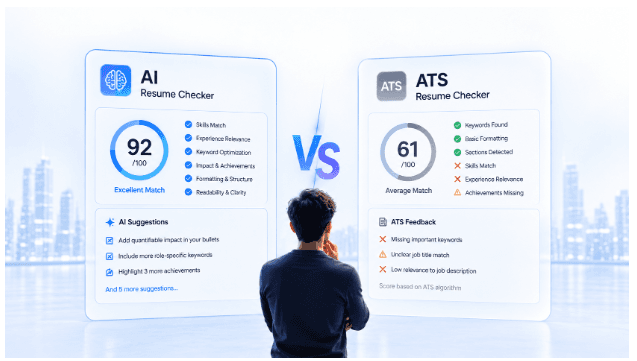
AI Resume Checker vs ATS Resume Checker: What's the Difference
Garima

Jun 23, 2026
One AI Assistant vs Multiple AI Tools: Which Is Better
Garima