
Garima

A job application can take 20 minutes to prepare and only a few moments to lose relevance in a crowded hiring pipeline.
That does not necessarily mean the candidate lacks experience. The resume may simply fail to make the right skills, achievements, or role fit clear enough during the first stages of candidate screening.
Modern hiring has moved far beyond recruiters manually reading every resume from top to bottom. The recruitment process increasingly combines applicant tracking systems, search tools, structured evaluation, skills-based hiring, and AI recruitment technologies before a final shortlist reaches the interview stage.
LinkedIn's Future of Recruiting 2025 report found that 73% of talent acquisition professionals believe AI will change how organizations hire. The report also found that 37% of organizations were already experimenting with or actively integrating generative AI into hiring.
For candidates, this changes an important question. Instead of asking only, "Is this a good resume?" it becomes more useful to ask, "Does this profile make the right evidence easy to find?"
In This Blog, We’ll Explore how recruiters shortlist candidates, what happens during resume screening,and how candidates can build stronger alignment with the roles they target.
Shortlisting Is No Longer Just a Resume Review
The traditional picture of recruitment is simple: applications arrive, a recruiter reads them, strong candidates are selected, and interviews begin.
The reality is more layered. Depending on the organization and role, modern candidate screening can involve several filters. An ATS may organize applications. Search and matching tools may surface relevant profiles. Recruiters may compare experience against essential requirements. Skills assessments, portfolios, work samples, or screening questions may add another layer of evidence.
That means candidate shortlisting is rarely based on one impressive line.
It is based on the overall strength of the match.
A candidate may have a strong background but still lose visibility when the resume does not clearly connect that background to the role. Another candidate with slightly less experience may move forward because the relevant skills, results, and role fit are easier to identify.
The goal of modern screening is therefore not simply to find the "best resume." It is to identify candidates who appear most relevant to the requirements of the position.
What Actually Happens After an Application Is Submitted?
The path from "Apply" to "Interview" is better understood as a funnel than a single decision.
The Application Enters the Hiring System
Once submitted, candidate information usually enters an applicant tracking or candidate tracking system. The system helps recruitment teams collect applications, organize profiles, manage stages, record feedback, and maintain a searchable hiring pipeline.
At this point, basic information such as job titles, experience, education, skills, and application responses may become part of the candidate record.
Basic Requirements Narrow the Pool
Some applications may fall outside essential requirements. These can include factors such as relevant experience, required qualifications, location, work authorization, availability, or responses to job-specific screening questions.
This first layer of recruitment screening helps reduce a large applicant pool into a more manageable group.
Role Relevance Becomes the Main Question
The next comparison is deeper:Does the profile actually match the work?
Recruiters may look for relevant skills, similar responsibilities, industry knowledge, tools, measurable achievements, seniority, and evidence that the candidate has handled comparable problems.
This is where generic resumes often struggle. A resume can contain plenty of experience while still making role relevance difficult to identify.
Evidence Separates Similar Candidates
Suppose two marketing candidates both mention SEO.
One writes: "Responsible for SEO activities."
Another writes:"Increased organic traffic by 32% through content optimization and keyword strategy."
Both mention the same broad skill. Only one provides evidence of impact.
When recruiters reach the deeper stages of the candidate selection process, proof becomes increasingly valuable.
Human Judgment Shapes the Final Shortlist
Technology can organize, search, compare, and surface information. It does not remove the recruiter from hiring.
Recruiters and hiring managers still evaluate context, career progression, relevance, achievements, communication, and overall suitability before deciding which candidates should move forward.
That distinction matters: modern hiring is increasingly technology-assisted, but final candidate shortlisting still requires judgment.
Is the Resume Showing the Right Match?
See how closely skills and experience align with the roles being targeted.
What Recruiters Notice When Candidates Look Similar
Most candidates expect job title and years of experience to dominate the decision.
They matter, but recruiters often have to make finer distinctions.
Relevance Before Volume
Ten years of unrelated experience may not automatically outweigh three years of highly relevant experience.
Recruiters are trying to solve a hiring problem. The profile that makes its relevance easiest to understand often has an advantage over one filled with information that does not support the role.
Skills That Match the Work
Skills are becoming increasingly important in hiring.
The World Economic Forum's Future of Jobs Report 2025 found that 63% of employers identified skills gaps as a major barrier to business transformation. The report also expects nearly 40% of skills required on the job to change by 2030.
This helps explain why modern screening increasingly focuses on what candidates can actually do, not only where they studied or which titles they previously held.
Relevant technical skills, tools, certifications, projects, portfolios, and practical assessments can all strengthen a profile.
Achievements Instead of Responsibilities
Recruiters already know what many job titles generally involve.
What they do not know is how well the candidate performed.
Statements such as "managed campaigns" or "worked with customers" explain responsibilities. Statements supported by revenue, growth, efficiency, conversion, cost savings, project scale, or another measurable outcome provide stronger evidence.
Career Story and Progression
A resume is also read as a story. Recruiters may notice increasing responsibility, movement into specialized work, promotions, career changes, employment gaps, or transitions between industries.
None of these automatically determines the outcome. Context matters.
For career switchers in particular, transferable skills and relevant proof can make the connection between past experience and the target role much clearer.
Where AI Has Entered the Shortlisting Process
The biggest change in modern recruitment is not that recruiters have disappeared. It is that technology can now handle more of the repetitive work around them.
AI candidate screening, and other AI recruiting tools can help hiring teams work with larger talent pools without manually processing every piece of information in the same way.
Modern AI hiring tools may support tasks such as identifying potentially relevant profiles, comparing candidate information against role criteria, organizing applications, summarizing candidate information, supporting outreach, and helping recruitment teams search large databases.
LinkedIn reports that talent acquisition professionals experimenting with or integrating generative AI save about 20% of their workweek on average, illustrating why automation is gaining ground in recruiting.
The important distinction is that ai for hiring works best as decision support rather than an automatic definition of who deserves a job.
Human review remains important because hiring involves context that cannot always be reduced to keywords or scores.
Why Modern Screening Can Benefit Both Sides
Technology-assisted candidate screening is often discussed only from the recruiter's perspective, but a well-designed process can improve the experience on both sides.
For hiring teams, better screening can make large applicant pools easier to manage, reduce repetitive resume review, surface relevant candidates faster, create more consistent evaluation criteria, and leave recruiters with more time for interviews and candidate relationships.
For candidates, stronger matching can potentially make relevant skills easier to surface. Skills-based screening can also create more room for projects, assessments, transferable skills, and demonstrated ability rather than relying exclusively on degrees or traditional career paths.
The quality of the process still depends on how screening criteria and technology are designed and used. Automation alone does not guarantee fair or accurate hiring.
A Smarter Way to Think About Getting Shortlisted
Getting shortlisted is not about following a perfect formula. It is about making it easy for recruiters to understand why a candidate fits the role.
Instead of treating shortlisting like another rigid checklist, focus on the areas that make a candidate profile relevant, credible, and easy to evaluate.
Define a Clear Target Role
A resume that tries to target marketing, sales, operations, HR, and consulting at the same time can struggle to communicate a clear direction.
A defined target role makes it easier to highlight the right skills, experience, keywords, and achievements. It also helps recruiters quickly understand where the candidate fits.
Match the Language of the Role
Job descriptions reveal what employers value most.
Relevant skills, tools, responsibilities, and terminology should appear naturally in the resume when they genuinely match the candidate's experience.
This does not mean copying the job description. It means presenting experience in language that clearly connects with what the employer is looking for.
Back Skills With Real Evidence
Listing skills is easy. Proving them is what makes a profile stronger.
Instead of simply mentioning Excel, Python, SEO, sales, analytics, or project management, candidates should connect those skills to actual projects, responsibilities, and results.
Measurable achievements, portfolios, certifications, assessments, work samples, and completed projects can all provide stronger evidence of capability.
Make Important Information Easy to Find
Recruiters often have limited time during resume screening, so the most relevant information should be easy to spot.
Dense paragraphs, vague headings, unnecessary details, and buried achievements can make strong experience easy to overlook.
Clear formatting, concise bullet points, relevant keywords, and visible achievements help recruiters understand a candidate's value faster.
Keep the Professional Profile Consistent
Recruiters may look beyond the resume when evaluating candidates.
LinkedIn profiles, portfolios, GitHub repositories, certifications, assessments, and projects can all strengthen the overall profile.
When these elements support the same skills, experience, and career direction shown on the resume, they create a more credible professional story.
Are Your Best Skills Getting Lost in the Resume?
Make skills, achievements, and impact easier for recruiters to recognize.
Why Strong Candidates Still Miss the Shortlist
Being qualified does not automatically guarantee a shortlist.
Sometimes the problem is not capability but how clearly that capability is presented. In other cases, another candidate may simply demonstrate a closer match to the role.
Several common issues can weaken an otherwise strong application:
Using a generic resume: One resume is used for very different roles, making it harder to demonstrate strong relevance.
Listing skills without proof: Skills are mentioned without projects, achievements, or results showing how they were applied.
Burying relevant experience: Strong achievements exist, but recruiters have to search through too much information to find them.
Relying too heavily on job titles: Titles provide context, but recruiters still need to understand responsibilities, contributions, and results.
Applying too broadly: Sending more applications does not necessarily improve the chances of getting shortlisted when the role is not a strong match.
The goal should not simply be to apply to more jobs. A stronger strategy is to improve the connection between the candidate's experience, resume, and the requirements of each opportunity.
Hiring Is Shifting From Credentials to Evidence
Recruitment technology may continue to evolve, but the central question behind candidate screening remains simple:
Can this person actually do the work?
That is why AI recruiting, skills assessments, structured interviews, portfolio reviews, work samples, and data-driven matching are becoming more important parts of hiring.
Degrees, previous employers, and years of experience still provide useful context. But employers increasingly want evidence that candidates can apply their knowledge and skills in real situations.
This shift can be particularly valuable for fresh graduates and career switchers who may not have years of directly relevant experience. Projects, internships, freelance work, certifications, assessments, portfolios, and measurable achievements can provide additional proof of capability.
The modern recruitment process is therefore becoming less dependent on one perfect credential and more focused on multiple signals that demonstrate skills, relevance, and potential.
For candidates, the goal is not simply to look qualified on paper. It is to make their ability easier for recruiters to see, understand, and trust.
Where Redrob AI Fits Into Modern Candidate Screening
As hiring becomes more skills-driven and data-assisted, recruitment teams need better ways to identify relevant candidates without turning the entire process into manual resume sorting.
That is where Redrob AI can fit naturally into the workflow.
For hiring teams, AI-powered recruitment capabilities can support candidate discovery, profile evaluation, resume ranking, and skills-based assessment. Instead of treating every application as an isolated document, recruiters can use technology to identify stronger matches and focus human attention where it matters most.
For candidates, the same shift reinforces the importance of creating a profile that clearly communicates skills, experience, achievements, and job relevance.
The larger idea behind AI candidate screening is not to remove human judgment. It is to make the early stages of hiring more focused so recruiters can spend less time searching through noise and more time evaluating promising candidates.
Could Better Screening Lead to Better Shortlists?
Use smarter candidate matching to surface relevant talent faster.
Final Thoughts
Getting shortlisted today is no longer only about having an impressive resume.
It is about making relevance visible.
Modern candidate screening combines technology, recruiter judgment, role requirements, skills, experience, and evidence. Candidate screening software and ai recruiting tools may make the first stages faster, but candidates still need to communicate what they can do and why it matters for the role.
The strongest applications make that connection easy to understand.
Instead of treating shortlisting as a mysterious decision happening behind an ATS, candidates can view it as a matching process: the clearer the connection between requirements, skills, experience, and proof, the stronger the application becomes.
Frequently Asked Questions
What is candidate screening?
Candidate screening is the process of evaluating applicants against job requirements to determine who should move forward in the hiring process.
How do recruiters shortlist candidates?
Recruiters typically compare relevant skills, experience, achievements, qualifications, application responses, and overall role fit before creating a shortlist.
Does AI automatically reject candidates?
Not necessarily. AI candidate screening can support matching, searching, ranking, or information analysis, while the exact process and level of human review vary by employer and tool.
What improves the chances of being shortlisted?
Clear role alignment, relevant skills, measurable achievements, readable formatting, and evidence of practical ability can make a candidate easier to evaluate.
How does Redrob AI support recruitment?
Redrob AI can help recruitment teams discover, evaluate, and compare relevant talent using AI-powered recruitment and skills-focused workflows.

Work Smarter with
One AI platform powering job search, work, discovery, and productivity.
Latest AI Blogs.
Jun 23, 2026
How Recruiters Actually Shortlist Candidates Today
Garima

Jun 23, 2026
Best AI Job Search Agents in 2026: Find Jobs Smarter with Redrob
Bhushan

Jun 23, 2026
How Recruiters Shortlist Candidates in 2026: A Complete Guide
Garima

Jun 23, 2026
How to Get More Interviews Without Applying to Hundreds of Jobs
Bhushan
Jun 23, 2026
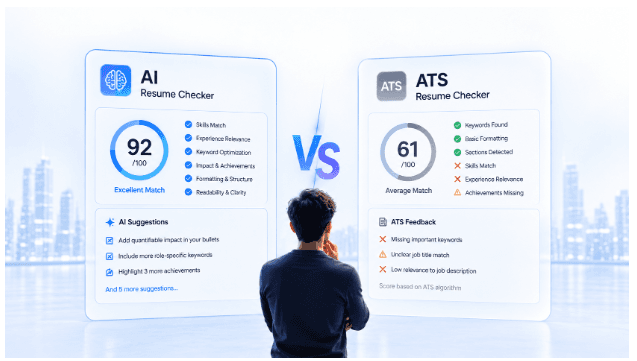
AI Resume Checker vs ATS Resume Checker: What's the Difference
Garima

Jun 23, 2026
One AI Assistant vs Multiple AI Tools: Which Is Better
Garima