
Garima
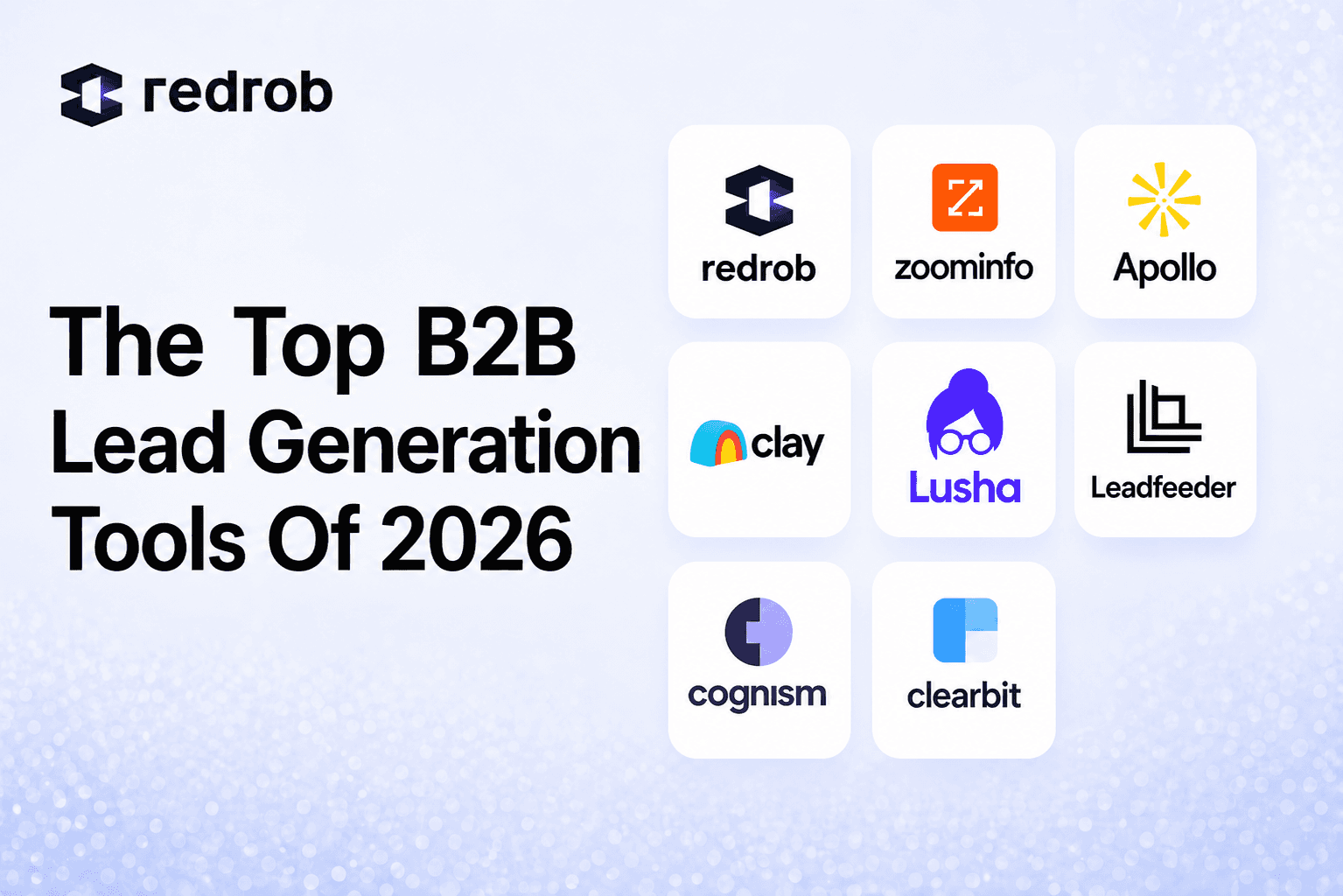
What if your SaaS company could predict exactly which prospects are ready to buy before your competitors even know they exist?
That’s the reality of B2B lead generation in 2026. The game has shifted from collecting massive lead lists to identifying high-intent, high-quality prospects using data and AI.
And here’s the catch…
Most companies are still getting it wrong. Studies show that nearly 80% of B2B leads never convert into sales, largely due to poor targeting and outdated data strategies.
At the same time, modern buyers are more independent than ever. They research, compare, and shortlist solutions long before talking to sales. That means your lead generation tools must do more than just provide data - they must deliver insight, intent, and timing.
This is why choosing the right b2b lead generation tools is critical for SaaS growth in 2026.
This blog explores the top b2b lead generation tools companies can use in 2026 to improve targeting, increase conversions, and build a more predictable pipeline.
What Makes a Great B2B Lead Generation Tool in 2026?
Before jumping into the top lead generation tools, it’s important to understand what separates average tools from high-performing ones.
The best platforms today combine:
Accurate and large contact databases
Real-time data enrichment
Buyer intent signals
Automation and integrations
AI-powered prospecting
The right sales lead generator helps you focus on quality leads instead of quantity.
Looking For High-Intent Leads?
Focus on real-time data, intent signals, and smarter targeting instead of static lists.
Try AI-Powered Prospecting
The Top B2B Lead Generation Tools for SaaS Companies in 2026
1. Redrob - AI-First Lead Generation for Modern SaaS
Redrob is one of the leading AI-powered B2B lead generation tools designed for modern SaaS companies that want to move beyond static data and focus on high-intent prospects. Instead of just providing contact lists, it helps teams discover leads who are actively showing buying signals, making outreach more relevant and effective.
Key features:
Database with 700M+ contacts and global company profiles
Intent-based filters (hiring, funding, growth signals)
CRM integrations
Pricing
Redrob follows a transparent credit-based pricing model designed for individuals and outbound prospecting teams.
Monthly Plans
Plan | Price | Monthly Credits |
Solo | $97/mo | 2,800 credits |
Growth | $148/mo | 4,500 credits |
Scale | $182/mo | 6,500 credits |
Credit usage
Email extraction: 1 credit
Phone number extraction: 3 credits
Annual Plans
For teams running large outbound campaigns, Redrob offers discounted annual plans with higher credit allocations.
Plan | Price (Billed Annually) | Annual Credits |
Solo | $77/mo | 33,600 credits |
Growth | $118/mo | 54,000 credits |
Scale | $145/mo | 78,000 credits |
These plans include the same core features as monthly plans while offering a lower effective cost per credit.
Pros:
Easy to navigate
All-in-one prospecting + engagement
Data powered by 19+ sources improves accuracy
Affordable startup plan for startups
Focuses on high-quality leads instead of volume
AI-driven targeting improves conversions
Cons:
Free trial comes with limited credits
Still Comparing Lead Generation Tools?
See how AI-driven prospecting can outperform static databases.
Explore Redrob Today
2. ZoomInfo
ZoomInfo is a lead generation software widely used by enterprise SaaS platforms for its massive database and advanced filtering capabilities. It provides deep company insights, organizational structures, and buyer intent data, helping sales teams target the right accounts at scale.
Key features:
Extensive contact and company database
Buyer intent signals
Advanced segmentation and filters
Org charts and company insights
CRM and sales tool integrations
Pricing
Starts at approximately $15,000/year with custom enterprise plans.
Pros:
One of the largest B2B databases available
Strong targeting and segmentation
Reliable for large outbound teams
Cons:
Expensive for startups and SMBs
Some data may not update in real time
3. Apollo.io
Apollo.io is an all-in-one sales lead generator that combines prospecting, outreach, and analytics into a single platform. It is especially popular among startups and growing SaaS companies because it offers a strong balance between functionality and affordability.
Key features:
Large B2B contact database
Built-in email sequencing and automation
Lead scoring and tracking
CRM integrations
Performance analytics
Pricing
Free plan available with limited credits
Basic: ~$49/user/month (billed annually) or $59/user/month (billed monthly)
Pros:
Affordable and scalable
Combines multiple tools into one
Easy onboarding for sales teams
Cons:
Uses credits that expire each cycle, and scaling usage increases real costs.
Limited depth compared to enterprise tools
Data accuracy may vary in some regions
4. Clay
Clay is a flexible lead enrichment tool that enables teams to build powerful, automated workflows by pulling data from multiple sources. It is widely used by growth teams and RevOps professionals who need deeper insights and customization.
Key features:
Multi-source data enrichment
Workflow automation
API integrations
Custom lead scoring
AI-powered data processing
Pricing
Starts at ~$167/month
Pros:
Highly customizable workflows
Strong enrichment capabilities
Ideal for advanced users and automation
Cons:
Requires time to learn
Not beginner-friendly
5. Lusha
Lusha is a simple and efficient lead generation tool that focuses on delivering verified contact details quickly. It is commonly used by sales teams for fast prospecting, especially through LinkedIn.
Key features:
Verified emails and phone numbers
Chrome extension for LinkedIn
CRM integrations
Quick contact lookup
Pricing
Free plan available with limited credits
Paid plans start at ~$37/user/month
Pros:
Very easy to use
Fast access to contact data
Budget-friendly option
Cons:
Full CRM integrations are only available on the Scale plan, which requires custom enterprise pricing.
Not suitable for advanced workflows
6. Leadfeeder
Leadfeeder is a website-based lead gen software that helps SaaS companies identify which businesses are visiting their website, even if they don’t fill out a form. It turns anonymous traffic into actionable sales opportunities.
Key features:
Website visitor identification
Company-level insights
Lead scoring
Google Analytics integration
CRM integrations
Pricing
Free version available
Paid plans start at ~$99/month
Pros:
Great for capturing inbound interest
Easy setup and integration
Helps prioritize warm leads
Cons:
Limited to company-level data (no individual contacts)
Full contact details require upgrades or extra credits
Remote work reduces IP-matching accuracy
7. Cognism
Cognism is a global lead generation software known for its compliance and high-quality international data. It is especially useful for SaaS platforms targeting European and global markets.
Key features:
GDPR-compliant database
Verified mobile numbers
Buyer intent data
International coverage
CRM integrations
Pricing
Custom pricing (typically starts around $15,000/year)
Pros:
Strong compliance and data privacy
High-quality international data
Reliable for global outreach
Cons:
Expensive for smaller teams
Requires annual commitment
8. Clearbit
Clearbit is a powerful lead enrichment tool that focuses on enhancing existing data and enabling real-time personalization. It is widely used by SaaS companies following a product-led growth strategy.
Key features:
Real-time data enrichment
Website personalization
Firmographic and technographic data
CRM and marketing integrations
Pricing
Custom pricing (~$10,000–$20,000/year typical)
Pros:
Excellent for enriching and segmenting leads
Strong integrations with marketing tools
Supports personalization at scale
Cons:
Not a standalone prospecting tool
Higher pricing for small teams
How Do You Choose the Right Lead Generation Tool?
Choosing the right lead generation software depends on your business goals, team size, and growth stage. Not every tool fits every SaaS company, so it’s important to align your choice with your overall sales and marketing strategy.
1. Define Your Goal
If your focus is outbound prospecting, you need B2B lead generation tools that help you find and connect with new leads efficiently.
If your focus is enrichment, you need platforms that enhance existing lead data with better insights.If your focus is automation and intelligence, you should prioritize tools that support AI-driven targeting and workflows.
2. Consider Your Budget
B2B lead generation tools range from affordable monthly subscriptions to high-cost enterprise platforms.
Startups usually benefit from lightweight tools, while larger teams often invest in advanced systems with deeper data and analytics capabilities.
Building GTM At An Early Stage?
Start with reliable prospect data, structured acquisition support, and startup-focused benefits.
Apply for Redrob Startup Plan
3. Evaluate Data Quality
The success of any sales lead generator depends heavily on the accuracy, freshness, and depth of its data.
Poor-quality data leads to wasted outreach, low conversion rates, and inefficient sales processes.
4. Look for Integrations
Your lead gen software should integrate smoothly with your CRM, email tools, and existing SaaS platform stack.
Strong integrations reduce manual work and improve overall sales efficiency.
5. Think About Scalability
A good lead generation tool should grow with your business.As your team expands, the tool should support higher data volume, automation, and more complex workflows without losing performance.
Most successful teams don’t rely on a single tool. Instead, they build a stack of complementary solutions that handle prospecting, enrichment, outreach, and analytics together.
Final Thoughts
In 2026, the difference between average and high-performing SaaS companies comes down to how effectively they use B2B lead generation tools.
The tools listed above are not just databases, they are complete lead generation software solutions that help you identify, qualify, and convert the right prospects.No matter which platform you use, the key is to focus on quality, intent, and timing.
The future of lead generation isn’t more leads - it’s better leads.
If you’re looking to modernize your outbound strategy with AI-driven prospecting and high-intent targeting, you can book a demo with Redrob to see how it fits into your lead generation stack and helps scale your pipeline more efficiently.
Want More Qualified Leads Instead Of More Noise?
Use AI-powered prospecting to identify high-intent buyers and build a predictable pipeline.
Book A Demo Now!
Frequently Asked Questions
1. What are the best B2B lead generation tools in 2026?
Redrob, Apollo, ZoomInfo, and Clay are among the best lead generation tools available today.
2. Which lead generation software is best for startups?
Redrob and Apollo are ideal due to affordability, ease of use, and startup-friendly plans.
3. What is a lead enrichment tool?
A lead enrichment tool enhances your lead data with additional insights like company details, job roles, and intent signals.
4. How much does lead gen software cost?
Pricing ranges from free tools to $15,000+ per year depending on features and scale. Most tools also use credit-based systems, so actual costs often exceed the advertised per-seat price.
5. Should I use multiple lead generation tools?
Not necessarily. Platforms like Redrob aggregate data from 19+ sources, so you can handle prospecting, enrichment, and outreach in one place without relying on multiple tools.

Work Smarter with
One AI platform powering job search, work, discovery, and productivity.
Latest AI Blogs.

Jun 23, 2026
How Recruiters Actually Shortlist Candidates Today
Garima

Jun 23, 2026
Best AI Job Search Agents in 2026: Find Jobs Smarter with Redrob
Bhushan

Jun 23, 2026
How Recruiters Shortlist Candidates in 2026: A Complete Guide
Garima

Jun 23, 2026
How to Get More Interviews Without Applying to Hundreds of Jobs
Bhushan
Jun 23, 2026
AI Resume Checker vs ATS Resume Checker: What's the Difference
Garima

Jun 23, 2026
One AI Assistant vs Multiple AI Tools: Which Is Better
Garima