
Himanshi Gupta
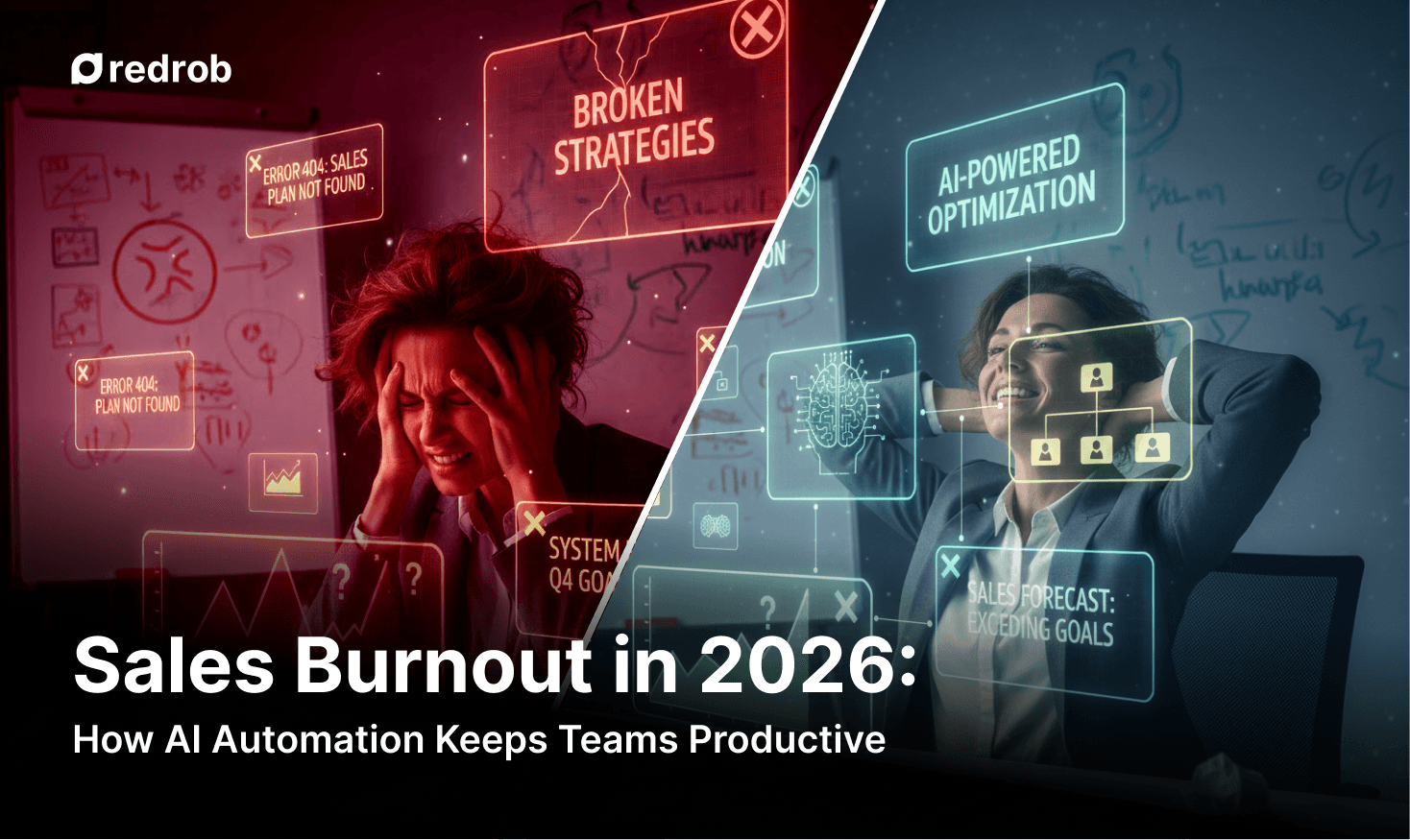
“It is not the load that breaks you down, it’s the way you carry it.” — Lou Holtz.
That line fits sales teams in 2026 a little too well, doesn’t it? The pressure isn’t new - targets, follow-ups, pipeline reviews but the weight distribution has changed. Reps are expected to prospect, personalize, document, report, and respond across channels… all while staying sharp on calls.
And when the day ends, the selling stops - but the admin doesn’t.
If you’re leading a sales team (or living this reality yourself), you’ve probably asked: Why does it feel like we’re always busy, yet always behind?
This blog breaks down the clearest signs of sales burnout and shows how AI sales automation can reduce fatigue, protect focus, and keep productivity steady - without adding more work to the workday.
The Burnout Problem Nobody Talks About On the Revenue Dashboard
Sales burnout rarely shows up as a “red alert” in your CRM. It shows up as missed follow-ups, shorter calls, more pipeline slippage, and that quiet thought: “If I have to log one more activity, I’m done.”
And in 2026, the pace isn’t slowing down. Microsoft’s Work Trend Index data shows 68% of people struggle with the pace and volume of work, and 46% report feeling burned out.
So what does sales burnout look like when it’s creeping in - not when it’s already blown up your quarter?
Still losing hours to manual prospect research?
Let Redrob surface verified contacts and high-intent accounts instantly.
Book a Demo Now!
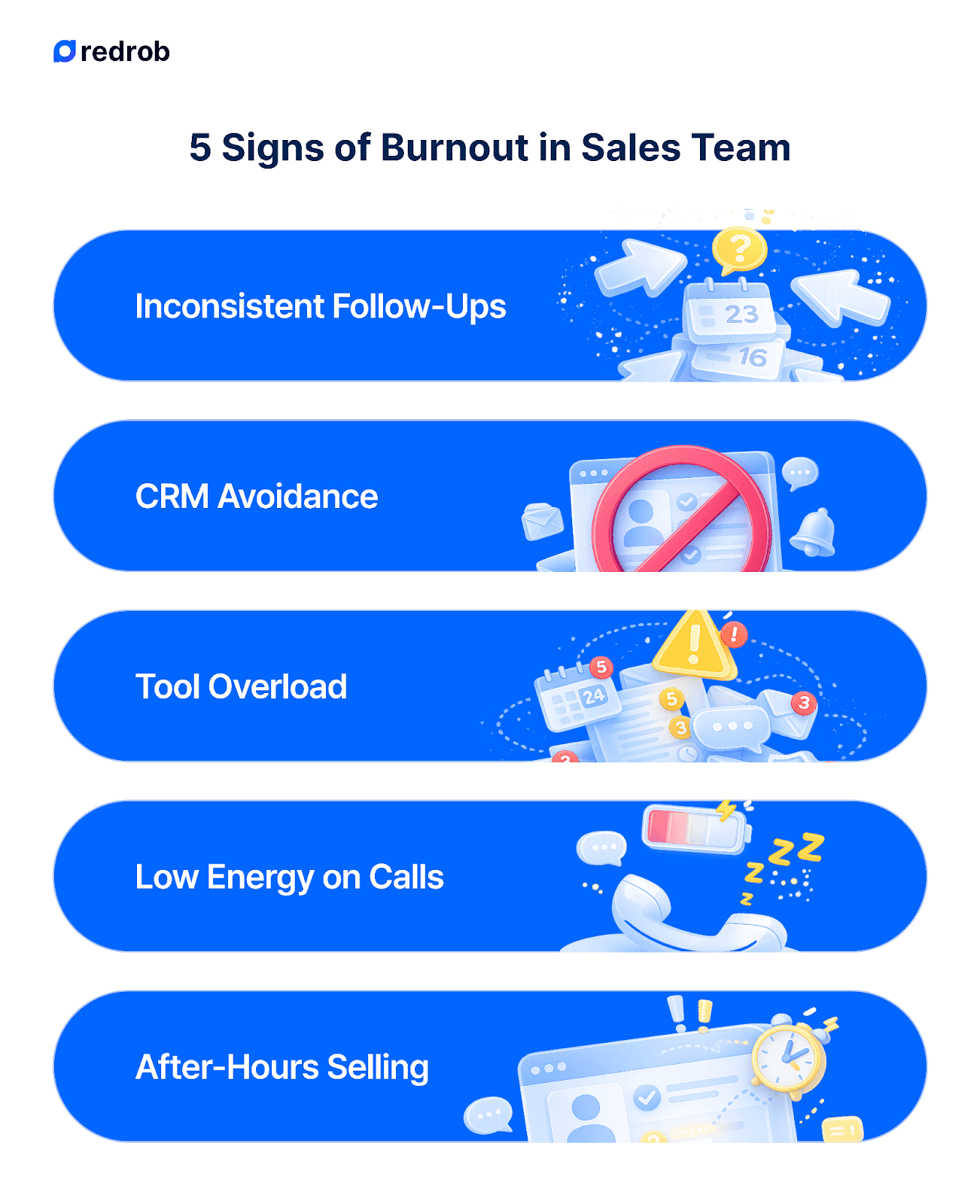
5 Signs Your Team is Burning Out (And It’s Already Costing Pipeline)
#1. Follow-ups become inconsistent (not because reps “don’t care”)
You’ll hear: “I’ll send it today,” and it slips to tomorrow… then disappears. If your strongest reps are dropping routine touches, it’s a bandwidth issue - not a motivation issue.
#2. CRM avoidance and delayed updates
When updates happen only right before forecast calls, that’s a signal. According to Everstage, reps spend less than 30% of their time actually selling - the rest gets eaten by non-selling work.
#3. Tool fatigue: too many tabs, too little progress
If your workflow needs email + LinkedIn + dialer + notes + enablement + CRM + spreadsheets… you’re basically asking reps to be human middleware. Did you know sales teams use an average of 10 tools, and 66% of reps feel overwhelmed by the number of tools.
#4. Emotional flatline on calls
Reps start sounding “script-perfect,” but not present. Fewer curiosity questions. Less energy to tailor a story. More “Just checking in…” messages.
#5. After-hours selling becomes the default
When evenings and weekends become catch-up time, burnout becomes predictable. Microsoft data also points to the workday skewing toward communication - users spend 60% of time on emails, chats, and meetings.
Here’s the uncomfortable question…
Are your targets aggressive or is your process just inefficient?
If your team is drowning in operational drag, you don’t need another pep talk. You need a system that behaves like a second set of hands.
That’s exactly why sales burnout solutions are shifting toward AI automation for sales teams - not to replace reps, but to protect their focus.
Why AI Sales Automation Changes the Burnout Equation
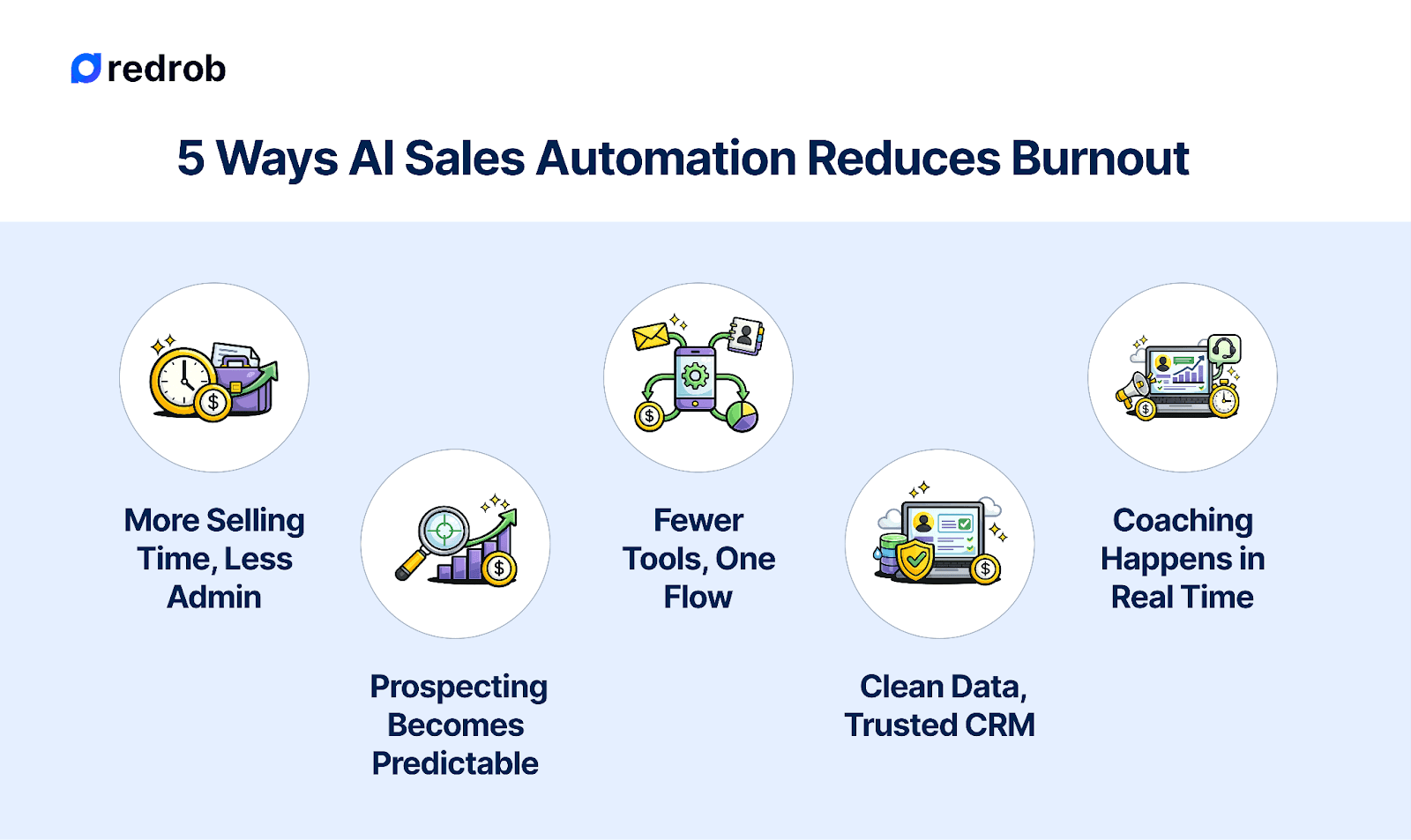
1. It gives reps back “selling time” without asking them to work harder
Burnout doesn’t always come from selling. It often comes from everything around selling - the prep, the cleanup, the research, the logging. In 2026, teams that use AI well aren’t magically more disciplined; they’ve redesigned the day so reps can stay in high-value work longer.
Automate activity capture (calls, emails, meetings) so reps don’t spend evenings updating records
Generate structured summaries and next steps right after conversations, while context is fresh
Trigger follow-up sequences based on intent signals, not manual reminders
Route leads automatically so reps don’t waste energy deciding “who owns this?”
Reduce context switching by pushing insights inside the workflow (not another dashboard)
And remember…when sellers spend most of their time on non-selling tasks, it’s not a motivation problem - it’s a design problem.
What would your week look like if your reps got even 60–90 minutes back per day?
2. It turns prospecting into a system, not an emotional roller coaster
Prospecting is where energy often dies: inconsistent results, repetitive outreach, rejection loops, and the pressure to “fill the top” even while closing. Salesforce highlights that teams are increasingly using AI agents across the cycle, including prospecting, to move faster while keeping experiences personalized.
Build target lists using firmographic + intent filters instead of manual scraping
Auto-enrich accounts and contacts to cut down “search time” and list decay
Create persona-specific outreach angles from customer and website context
Score leads using behavior signals so reps prioritize smarter
Keep inbound warm with 24/7 conversational handling, then hand off to reps at the right moment
This is one of the most practical ways to reduce sales rep fatigue: remove the “blank page” problem from outbound and replace it with guided momentum.
3. It removes “tool overload” by orchestrating work across systems
Tool overload is exhausting because it forces micro-decisions all day. Where is the latest info? Which doc is correct? Did I update the CRM? Did the sequence stop? Salesforce warns that only a third of sales teams use an all-in-one platform; many use an average of eight tools, and nearly half of reps say they’re overwhelmed.
Sync and standardize data so reps aren’t chasing the “truth” across tools
Automatically create tasks, notes, and updates from real interactions
Centralize playbooks so reps don’t reinvent the wheel for every deal
Push alerts only when action is needed (not constant noise)
Reduce duplicate work by connecting CRM, email, calendar, calling, and outreach
Here’s the burnout connection: when reps feel behind, they don’t just work more - they work fragmented. Fragmented work creates faster exhaustion than hard work.
4. It improves data quality so reps stop fighting their own CRM
Bad data creates invisible burnout. Reps lose confidence in pipeline reviews, forecasts, handoffs - and they compensate by overworking. Data issues like manual errors and duplicate data hold teams back, and many customers now ask detailed questions about security and data handling.
Auto-fill fields from conversations to reduce manual entry and mistakes
Deduplicate contacts/accounts so reps aren’t emailing the wrong record
Standardize stages and required fields so forecasting doesn’t feel like policing
Track engagement and product usage signals to support more relevant follow-ups
Add governance around access and security so AI can help without risk
This is where sales productivity automation tools and a modern sales automation platform do more than “speed things up.” They restore trust - in the pipeline, in the process, and in the rep’s own effort.
5. It makes performance sustainable by supporting coaching in the flow of work
One of the most overlooked burnout drivers is uncertainty:
“Am I saying the right thing?”
“Is my call quality improving?”
“Why am I losing deals?”
There are many instances where reps lack consistent feedback, and that time constraints limit coaching at scale - which is why teams are turning to AI agents for coaching and roleplay support.
Suggest objection-handling and talk tracks based on real call moments
Identify deal risks early (no next meeting, multi-threading missing, weak champion)
Provide personalized coaching nudges instead of generic enablement sessions
Auto-generate call scorecards and improvement areas without manual review
Help managers coach more reps without “being in every deal”
The goal isn’t to replace managers - it’s to prevent reps from feeling like they’re guessing alone. And in 2026, guessing is expensive energy.
How Redrob Helps Teams Stay Productive Without Burning Out
Redrob helps modern revenue teams implement AI automation for sales teams in a way that actually sticks - because it’s built around real workflows, not shiny features. We focus on the moments that quietly cause burnout: the after-call scramble to write notes, the endless “quick follow-up” drafts, the CRM updates nobody trusts, the pipeline check-ins that turn into interrogation.
Here is how teams use Redrob to support real sales burnout solutions:
AI-powered smart filters surface high-intent accounts, reducing wasted outreach and helping reduce sales rep fatigue.
Natural language search removes complex filter setup, allowing reps to build precise segments quickly.
Real-time contact verification ensures reps trust the data they work with, lowering frustration and rework.
A unified API layer keeps enriched data synced across CRM workflows, reducing manual updates.
The Chrome extension captures verified contacts directly from LinkedIn, saving hours every week.
Teams using Redrob typically cut research time from nearly 30 hours per week to around two. Reply rates improve from roughly 8% to over 30%, not by pushing harder, but by working smarter.
Burnout is not solved by motivation alone. It is solved by systems that respect time, attention, and effort. That is the standard we build for every day.
Ready to reduce sales burnout without hiring?
Start automating prospecting and contact research with Redrob today.
Connect Now!
Frequently Asked Questions
1. What is sales burnout?
Sales burnout is a state of mental and emotional exhaustion caused by constant targets, repetitive tasks, and tool overload, leading to lower productivity, missed follow-ups, disengaged conversations, and declining performance over time.
2. What causes sales burnout in modern sales teams?
Sales burnout is usually caused by excessive administrative work, fragmented tools, manual prospecting, poor data quality, and constant context switching, which reduce selling time and force reps to compensate by working longer hours.
3. Why is sales burnout increasing even when teams use more tools?
Sales burnout increases when tools add complexity instead of reducing work. Multiple dashboards, manual updates, and disconnected systems increase cognitive load, fragment focus, and make reps feel constantly behind despite higher activity levels.
4. Can AI tools really reduce sales rep fatigue?
Yes. AI tools like Redrob reduce sales rep fatigue by automating prospect research, surfacing verified contacts, and simplifying workflows, helping reps avoid repetitive work and regain focus on high-value selling activities.
5. Are sales productivity automation tools worth it for small teams?
For small teams, sales productivity automation tools are especially valuable. Platforms such as Redrob help teams scale prospecting and follow-ups efficiently without adding headcount, preventing burnout while maintaining consistent pipeline coverage.
6. How does Redrob help prevent sales burnout specifically?
Redrob helps prevent sales burnout by reducing research time, verifying contact data in real time, and integrating seamlessly into existing workflows, so reps spend less time managing tools and more time selling effectively.

Work Smarter with
One AI platform powering job search, work, discovery, and productivity.
Latest AI Blogs.

Jun 23, 2026
How Recruiters Actually Shortlist Candidates Today

Garima

Jun 23, 2026
Best AI Job Search Agents in 2026: Find Jobs Smarter with Redrob
Bhushan

Jun 23, 2026
How Recruiters Shortlist Candidates in 2026: A Complete Guide
Garima

Jun 23, 2026
How to Get More Interviews Without Applying to Hundreds of Jobs
Bhushan
Jun 23, 2026
AI Resume Checker vs ATS Resume Checker: What's the Difference
Garima

Jun 23, 2026
One AI Assistant vs Multiple AI Tools: Which Is Better
Garima